Food Systems
Strategies for Food Systems
Tools for Food Systems
Displaying the most recent 1 of 39 total tools.
Food Demonstration Training and Videos
Posted on
The Food Demonstration Refresher Training Modules, hosted by Jennifer Parlin, Jennie Altman, and Christina Vega, will will cover the most important points you need to know to run a clean, safe, and crowd-pleasing food demonstration. Each topic is covered in more detail in the Food Safety & Food Demonstration Guide.
Summer Food Service Program (SFSP)
Posted on
The Arizona Summer Food Service Program webpage shares where children and teens (18 and under) can receive free meals during the summer, with an interactive map to find nearby sites. It also highlights resources for partners, including the Summer Food Program Toolkit (SFSP Toolkit), which provides customizable materials and guidance to support outreach and promotion.
Tribal Food Sovereignty Series: Part 2
Posted on
This Tribal Food Sovereignty Speaker Series provided AZ Health Zone staff and community partners with a deeper understanding of Tribal food sovereignty and justice efforts across Arizona. This recorded training provides some best practices for authentic relationship-building and ways to nurture food systems partnerships with Tribal community members and grassroots organizations leading food soveriegnty efforts with their communities.
https://us02web.zoom.us/rec/share/pqRhfP5pP8nxHsZVM6ftn3avy-noKLkjtmKib2zEZJPbGzP5TdDs_OF1Llwk9OqE.lWaEErKKsgnn4_rI
Tribal Food Sovereignty Speaker Series: Part 1
Posted on
This Tribal Food Sovereignty Speaker Series provided AZ Health Zone staff and community partners with a deeper understanding of Tribal food sovereignty and justice efforts across Arizona. This recorded training provides some best practices for authentic relationship-building and ways to nurture food systems partnerships with Tribal community members and grassroots organizations leading food soveriegnty efforts with their communities.
https://us02web.zoom.us/rec/share/IsPKsB0lzHfuVx202ZzRCHjjwHds3Rge0RXUIUscVa6_vYaCVZeXd-GqKb_sVct1.pARzGrHKpPMGcZ9K
DIG in Community Implementation Training
Posted on
This recorded training provides an implemention overview, support and tools for the DIG in Community Evaluation Tool.
https://us02web.zoom.us/rec/share/rr-eKdQjDhQKp2nq4pR7WIYuuZ81l9GzmQdoDROK6UHykW1YZFlMnjt7LbE1h9l1.qmi1_KOUUjo45e8F
Food Systems Implementation Stages Training (04/2021)
Posted on
Food and Food Systems Resources
Posted on
These resources are for individuals, households, governments, tribes, institutions, communities, and community-based and feeding organizations.
Visit Website
Tribal Farm to ECE
Posted on
Farm to ECE in Tribal programs can be used to introduce the traditional foods, foodways, culture and language of the Tribe. Although farm to ECE is relatively new, this practice of embracing Indigenous knowledge and values in harmony with Native lifeways has existed for generations and has proven positive results on health, education and hunger.
View Website
Grant Training Part 2: Research and Application (2 of 2)
Posted on
Grant Training Part 2 of 2, presented by Pinnacle Prevention in 2023.
View Webinar
Grant Training Part 1: Collective Impact and Community Partnership (1 of 2)
Posted on
Grant Training Part 1 of 2, presented by Evelyn Whitmer & Rhegan Derfus in 2023.
View Webinar
Fresh Farm Produce 101
Posted on
A short guide to identifying, storing, and preparing vegetables.
See Guide
Farm2ECE Resources
Posted on
These resources can help advance Farm to Early Care and Education (ECE) in your state or community. Farm to ECE programs provide children with increased access to healthy, regionally produced foods through local purchasing. They can also help children learn more about food and how food is grown.
View Website
SUNBucks Overview and Support
Posted on
Training on what SUNBucks is and what AZ Health Zone Local Implementing Agencies can do to support.
SUNBucks Overview and Support Training
Engage Community Members in 10 minutes or Less
Posted on
Community engagement webinar presented on 11/9/23. Simple strategies to incorporate more community engagement. Facilitated discussion of successful strategies from AZ Health Zone local implementing agencies.
View recording
Fulfilling the Promise of Community Engagement
Posted on
Community Engagement webinar presented on 5/29/24. Strategies for using the information gathered through consulting, involving and collaborating.
Fulfilling the Promise of Community Engagement
DIG Planning Tool – Diné
Posted on
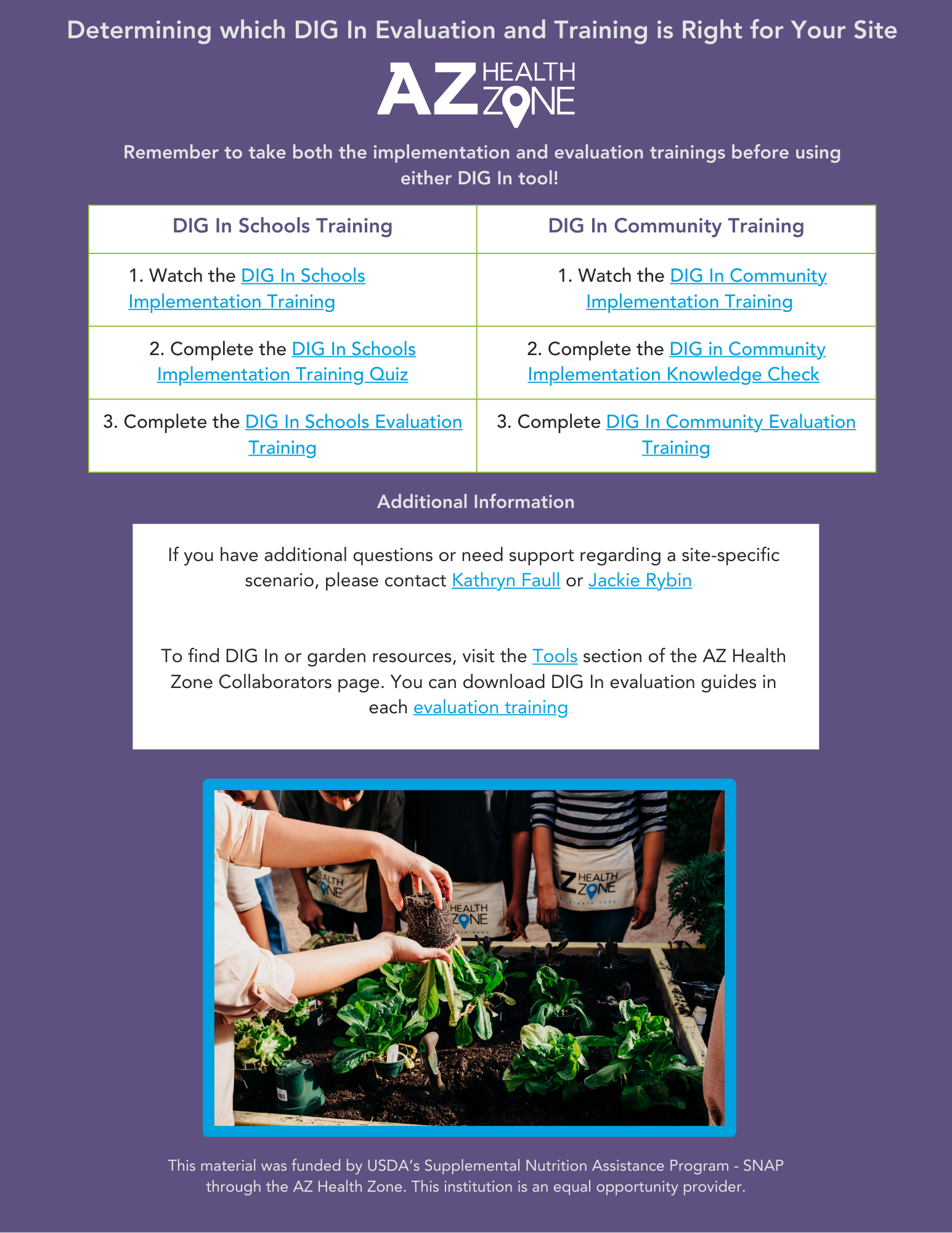
DIG in Community and Schools Infographic
Posted on
Determining which DIG In Evaluation and Training is Right for Your Site.
View Tool
DIG Action Planning Tool – Spanish
Posted on
Developing Integrated Gardens Action Plan
Posted on
Congratulations on completing Step 1 of the DIG in Cycle of Improvement! You can now use your DIG in tool results and this planning sheet for Step 2. We have created this template to help you and your team review your DIG in ratings, summarize your garden goals, create an action
plan and develop a task list for the next steps.
View Tool
Person-Centered Tips for Food Systems
Posted on
This resource and tip sheet is designed to support person-centered approaches for Food Systems strategies and activities.
View Tool

 weekly email for more recipes.
 602-542-1025
 602-542-0883